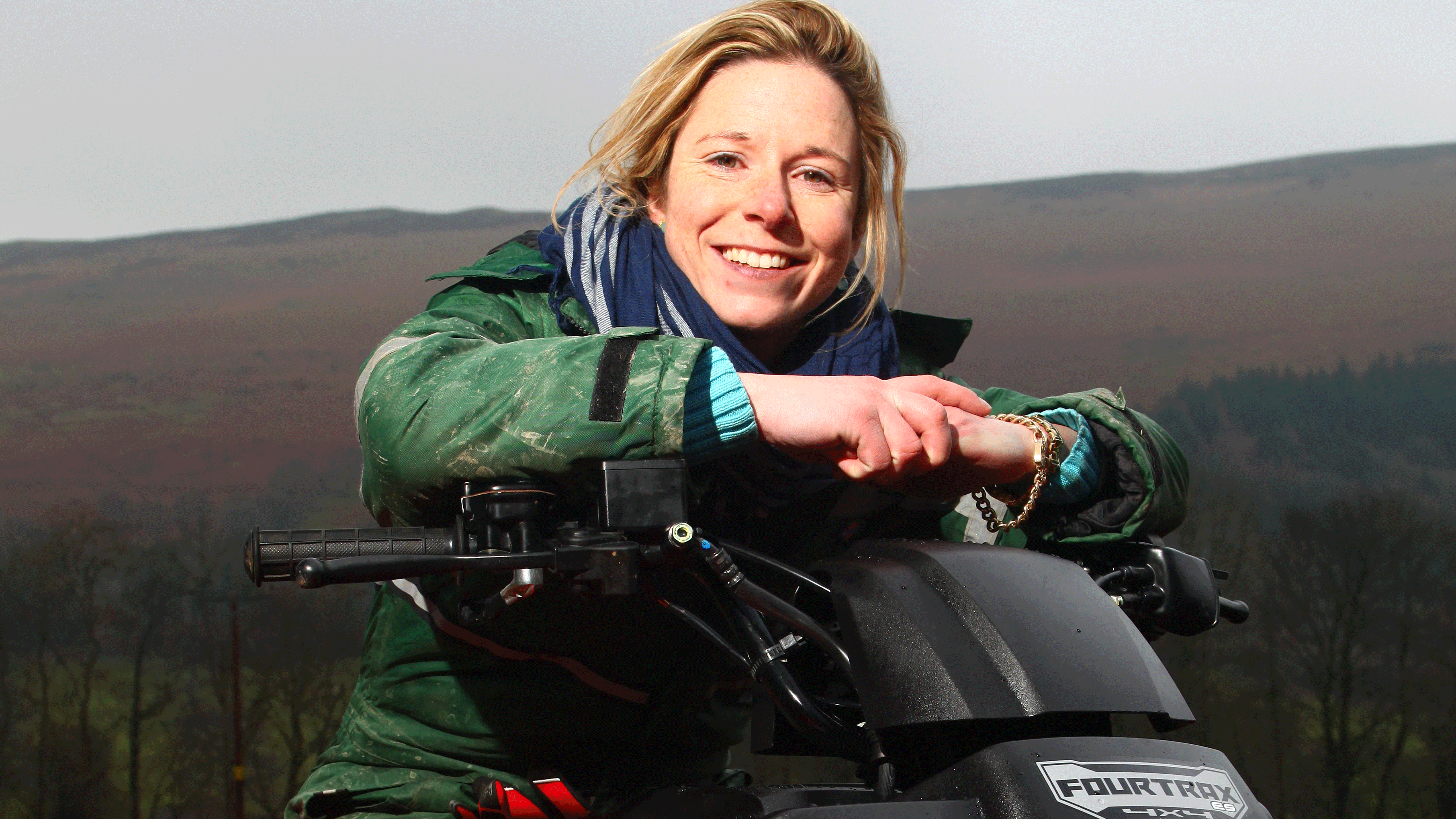
Photography by Kenny Pochodzaj
By Emily Padfield
It’s hard to imagine what life would be like on our farm without an ATV. Although not particularly testing ground, our clay-heavy land can get particularly wet and boggy in the winter, and travelling across any field with more than an ATV often leads to getting stuck.
ATV farm work
We have 950 ewes on 500 acres near Banbury, and my partner Mark Warner has been here for almost half a century – he was born here and took over at a young age, and remembers buying his first Honda TRX350 ATV around 15 years ago.
Our ATV is used not only to shepherd the ewes on the farm, but also to pull a feeder that delivers a calculated ration to ewes in the weeks before lambing. During lambing, it’s home to an in-field medicine chest, fully equipped with antibiotics, antiseptic spray, needles, syringes and many more essential items.
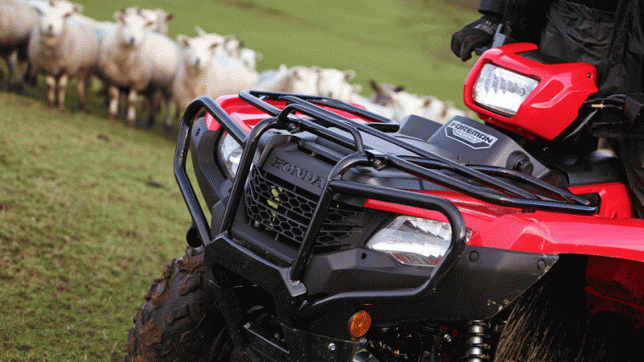
An ATV is indispensable for farmwork, especially with Emily’s 950 ewes
With the addition of a handy trailer, the TRX is also used for transporting ewes and lambs out to the field after they’ve lambed and spent a day or two in a pen mothering-up.
In short, ours is in use pretty much every day during the spring and early summer, and like many farmers we wouldn’t be without it. It’s also a favourite of our collie, Khal, when she’s not in work.
The ATV revolution
In 1982, Honda introduced a revolutionary product destined to change the lives of livestock farmers worldwide – the Big Red three-wheeler. Although three-wheelers had been around since the early-70s, the Honda ATC200E was the first bike to have suspension and racks, transforming this leisure vehicle into a true workhorse.
As technology progressed and the safety of three-wheelers became increasingly dubious, the four-wheeler, began to take over. Despite many manufacturers offering similar vehicles, it has been the Honda that’s remained a favourite with farmers ever since.
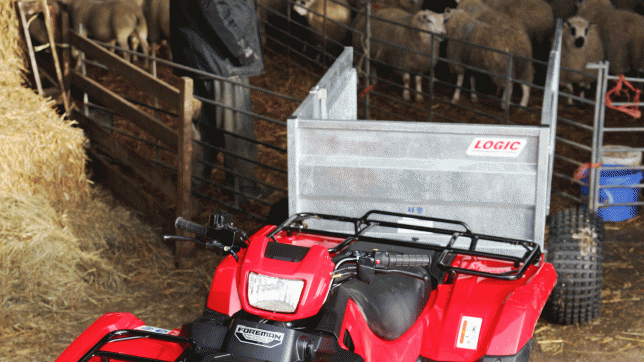
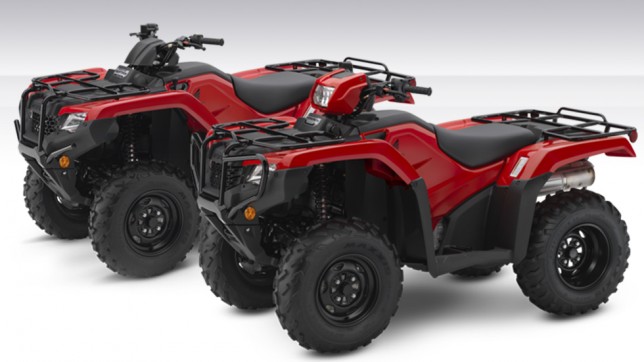
The TRX420’s big brother, the TRX500
The company’s best-selling model, the TRX420, last had an overhaul in 2007, so the promise of an update is really exciting. Having had the 2007 model on farm to test, I was lucky enough to compare like-for-like the impact of the new design changes during a challenging ride out in Wales.
Computer Aided Engineering
The 2014 model TRX420, alongside its bigger brother the TRX500, are different beasts altogether. Designed for the first time at the Honda Car R&D Centre in Ohio with Computer Aided Engineering, both the handling and performance are considerably different from the older models.
Although stiffer, the computer-designed, lighter chassis has a more comfortable feel to it. Fewer bumps when on the move, so smoother than the previous model.
ATVs have to traverse challenging terrain – the rider needs to be able to read this and adjust their response quickly. With the new frame, the bike’s handling is more stable and predictable.
Fivefold increase in longevity
All-new bodywork protects the rider from mud and water, whilst increased travel to front and rear suspension provides increased traction in sticky situations. A new fuel pump, the same as that used on the popular Honda CR-V, delivers a fivefold increase in longevity, to 62,000 miles.
Because both models are destined for a life in work, they have to be as frugal as possible, and thanks to an enhanced fuel injection system, fuel efficiency is up by 10%.
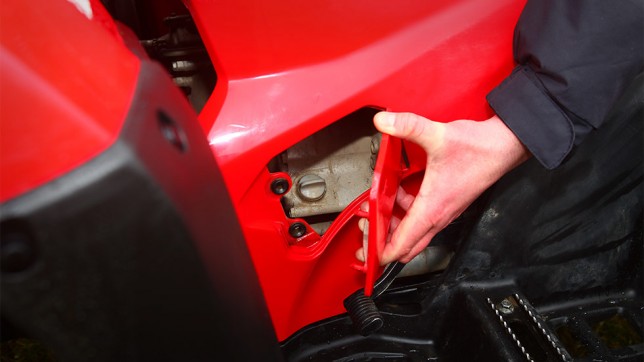
A new fuel pump, the same as on the Honda CR-V, delivers a fivefold increase in longevity
By introducing a new rear swingarm suspension system, there’s more durability at the back end too, whilst upgrading from rubber to plastic CV boots offers better protection.
Feeder control, sowing and spraying
We use our ATV for powering the electrics on the feeder, and many farmers use theirs for tasks like broadcasting seed and spraying. By upping onboard power availability by 21% through using a new dry-type battery, there’s now plenty of reserve without fear of draining it.
The fact that the US market has shifted, to a degree, more towards utility than leisure has really benefitted the new Fourtrax and Foreman models for the UK farmer. They will remain firm favourites on farms.